
Power Generation Has a Footprint Problem. Engineering Can Solve It.
The race to build more power generation is accelerating. Data centers, manufacturing plants, oil and gas operations, communities and critical infrastructure all want the same thing: more reliable electricity, delivered sooner.
But the industry cannot meet that demand simply by repeating the designs of the past at a larger scale.
Every new power project competes for land, equipment, skilled labor, water, fuel, transmission access and public acceptance. A plant may perform well on a spreadsheet and still struggle in the field because it occupies too much space, requires too much supporting infrastructure or creates an environmental burden that delays permitting and limits where it can be built.
The central engineering challenge is no longer only how to produce more megawatts. It is how to produce them with less.
Two Footprints, One Design Problem
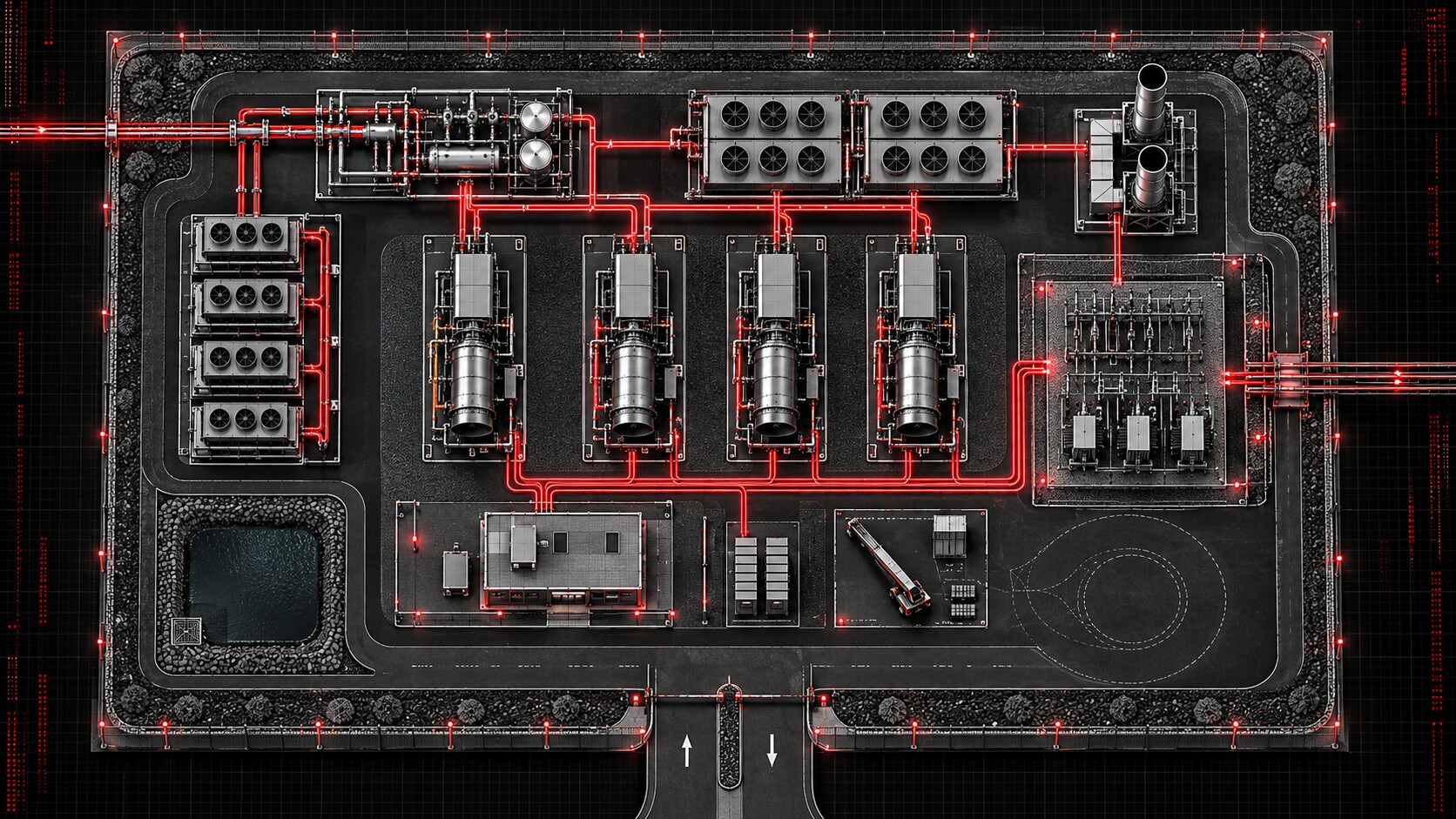
The physical footprint of a power project is easy to see. It includes the generation equipment, fuel treatment systems, cooling systems, electrical gear, access roads, laydown areas, pipe racks, maintenance clearances and interconnections required to make the plant function.
The environmental footprint is broader. It includes emissions, water consumption, noise, heat rejection, construction disturbance, waste, fuel transportation and the long-term effects of operating and maintaining the facility.
These footprints are often treated as separate concerns. They should not be. A larger site can require longer pipe runs, more cable, more steel, more grading and more maintenance travel. An inefficient equipment arrangement can increase pressure losses, auxiliary loads and fuel consumption. A cooling decision can affect land use, water demand, noise and operating cost at the same time.
Good engineering recognizes these relationships early. Poor engineering discovers them after equipment has been purchased.
Compact Does Not Mean Crowded
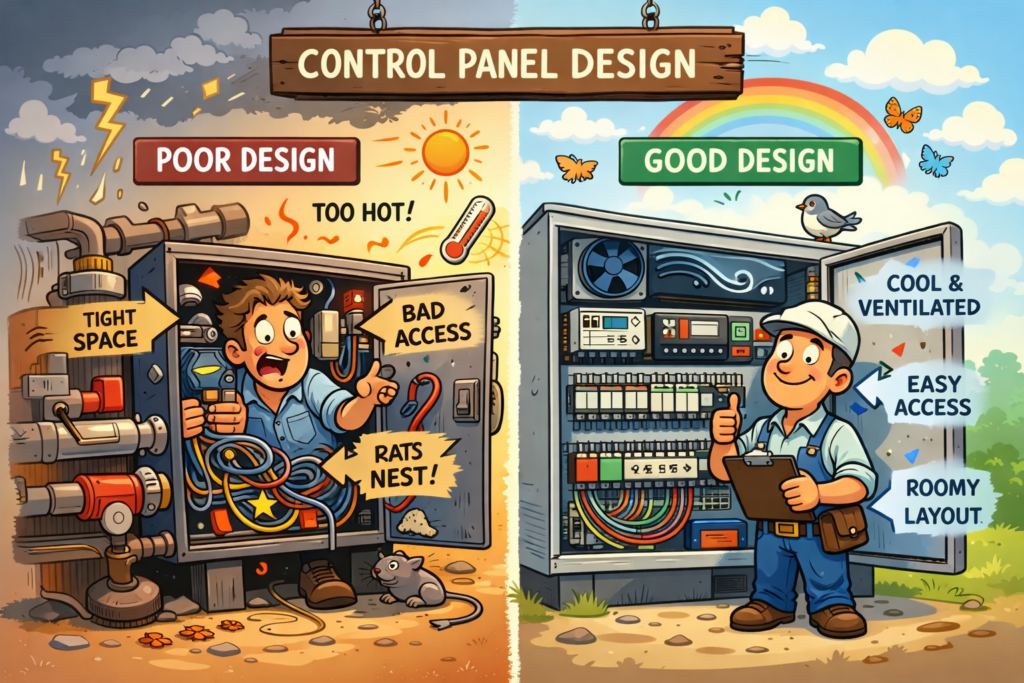
Reducing physical footprint is not a matter of pushing equipment closer together until it fits. That approach can produce inaccessible valves, unsafe maintenance conditions, inadequate ventilation and expensive shutdowns.
A compact facility must still be operable, inspectable and serviceable. The real opportunity comes from integrating systems more intelligently.
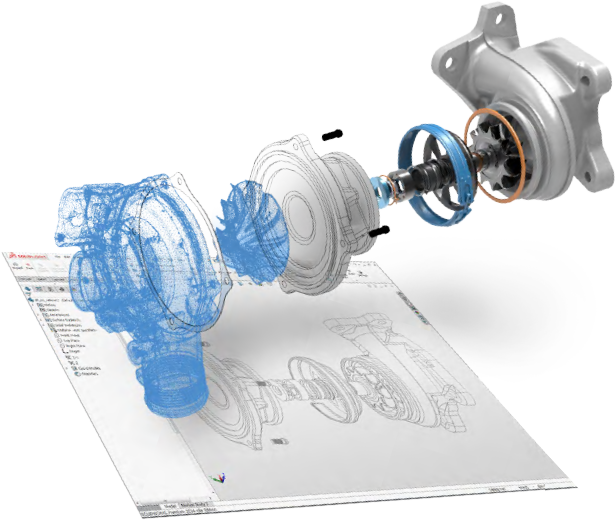
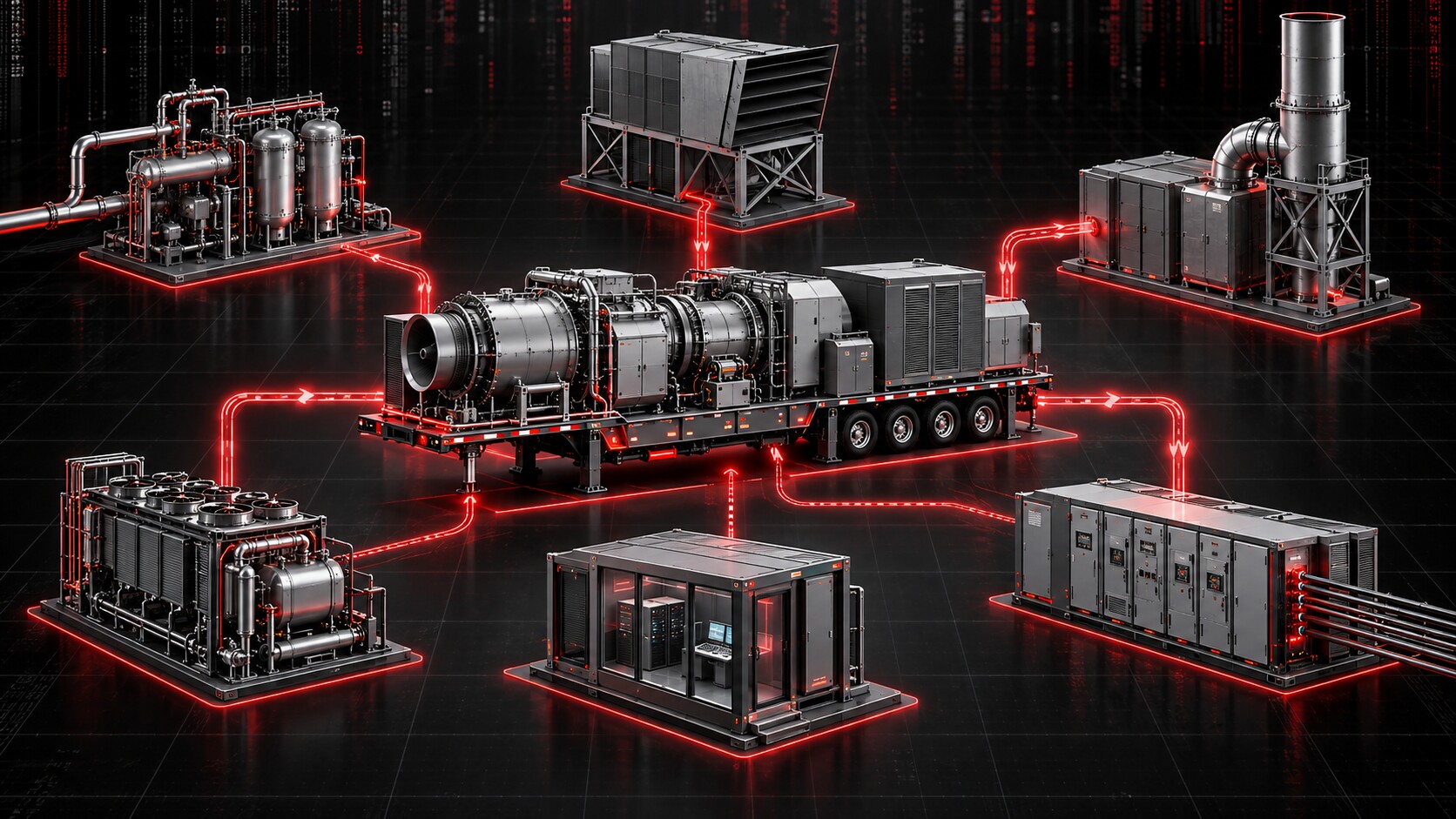
Modular skids can combine filtration, compression, pressure regulation, heating and metering into repeatable packages. Shared utility systems can eliminate redundant equipment. Better three-dimensional modeling can identify pipe routing conflicts, maintenance envelopes and lifting requirements before fabrication. Standardized interfaces can shorten field installation without forcing every plant into an inflexible standard design.
The distinction matters. Standardization should reduce unnecessary variation. It should not erase the realities of the site, the fuel source, the operating profile or the customer’s business.
In mobile and distributed power generation, this discipline is especially important. A turbine or generator may arrive on a trailer, but the facility is not truly mobile if the supporting gas conditioning, cooling, electrical distribution and emissions systems require months of custom field construction. Mobility must apply to the balance of plant, not only the prime mover.
Environmental Performance Begins Before Permitting
Environmental impact is too often addressed late, after the basic plant configuration has already been selected. At that point, engineers may be left adding controls to a system whose fundamental arrangement is inefficient.
A stronger approach begins with the process design.
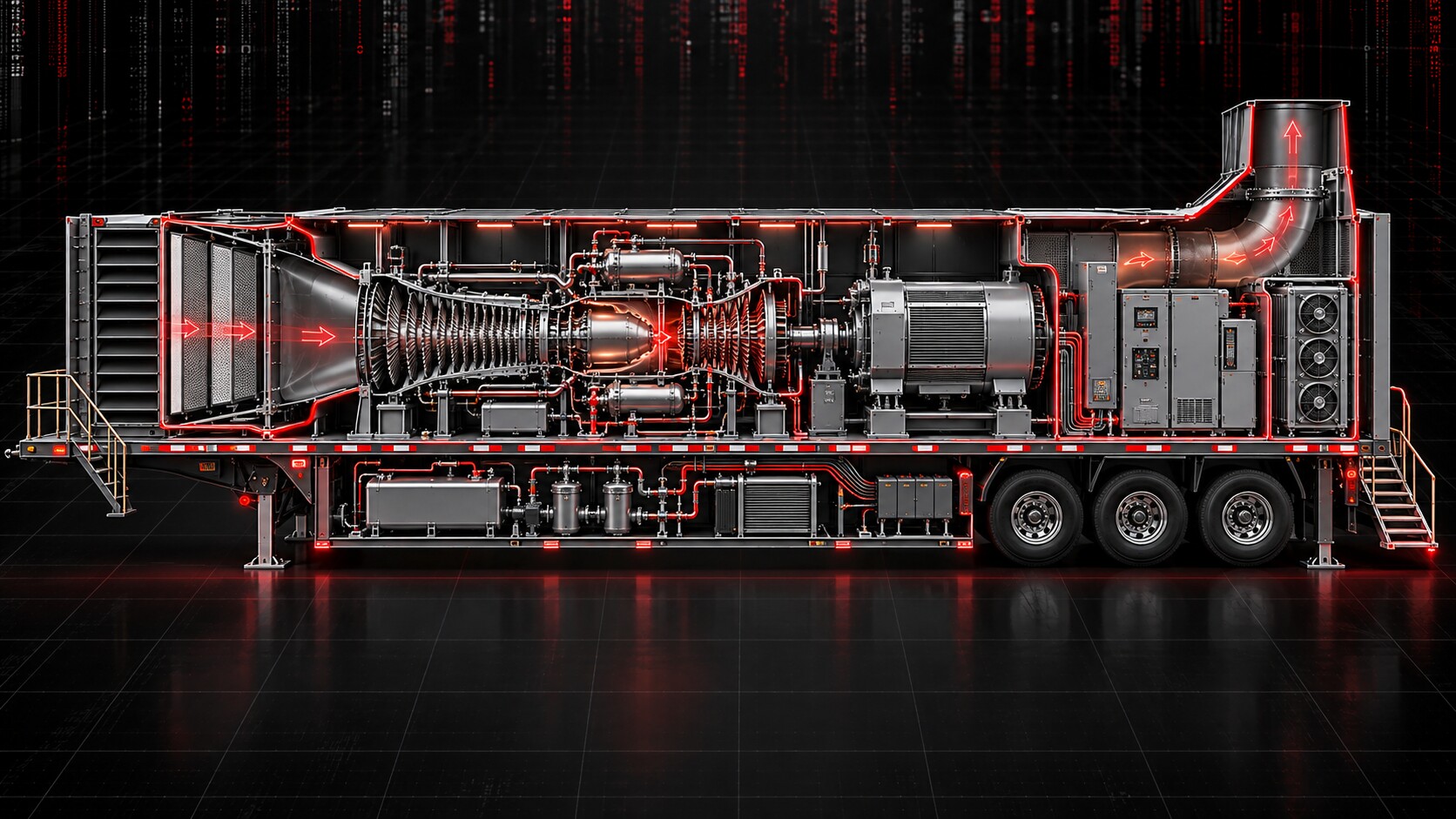
Fuel quality affects combustion performance, reliability and emissions. Pressure losses affect compression demand. Heat recovery affects fuel use. Cooling technology affects water consumption and auxiliary power. Equipment turndown affects how efficiently the plant responds when demand changes. Controls determine whether the system operates near its intended performance or merely within acceptable limits.
Each decision has consequences beyond its equipment tag.
For example, a high-efficiency component may offer little benefit if the surrounding piping creates avoidable losses. A low-emissions engine or turbine may still carry a significant environmental burden if poor fuel conditioning causes unstable operation or excessive maintenance. A water-saving cooling system may create unacceptable noise or parasitic load if it is selected without considering the full facility.
The goal is not to optimize individual pieces of equipment. It is to optimize the plant as a working system.
Speed Requires Better Front-End Engineering
Developers face intense pressure to move quickly. That pressure can make early engineering appear expendable. In practice, it makes disciplined front-end work more valuable.
A credible basis of design, process flow diagram, heat and mass balance, equipment list, layout and controls philosophy allow a project team to test the concept before committing capital. These documents reveal whether the proposed system can meet its capacity, emissions, fuel, water, maintenance and deployment targets together.
This is also where digital tools earn their place. Three-dimensional design, simulation and data-driven equipment selection can compress the learning cycle. Teams can compare layouts, identify bottlenecks and evaluate operating cases while changes are still inexpensive.
Innovation does not always arrive as a new machine. Often, it appears as a better arrangement, a simplified connection, a more useful model or the removal of equipment that never needed to be there.
The Industry Needs Practical Innovation
The power sector has no shortage of ambitious concepts. What it needs is practical innovation that can be fabricated, transported, installed, commissioned and maintained.
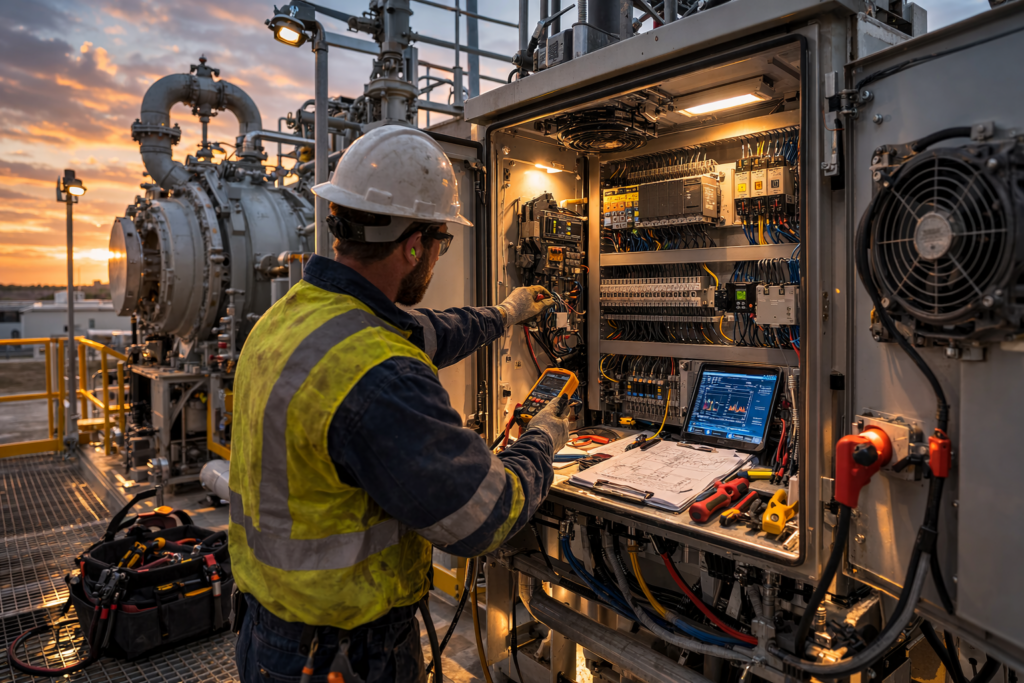
That requires collaboration across mechanical, electrical, structural, civil and controls disciplines. It also requires engineers to understand construction sequencing, operator access, vendor limitations and commercial risk. A technically elegant design that cannot be built on schedule is not an innovative design.
Polaris Engineering Group approaches power generation from this full-system perspective. We help clients develop generation packages and supporting infrastructure with careful attention to process performance, equipment integration, modularity, serviceability and execution in the field. Our work includes mechanical design, gas conditioning, process documentation, equipment layouts, piping systems, structural coordination and design packages that move projects from concept toward construction.
We do not view footprint reduction as a cosmetic exercise. It is a measure of engineering quality. A well-designed plant uses space deliberately, reduces unnecessary material, limits avoidable energy losses and gives operators safe access to the equipment that matters.
Build More Power, Use Less
The demand for electricity will continue to grow. So will scrutiny of where generation is built, how quickly it can be deployed and what it costs communities and the environment.
The companies that lead this expansion will not be the ones that simply fit more equipment onto a site. They will be the ones that rethink how the entire system works.
More capacity does not have to mean more sprawl. Faster deployment does not have to mean lower design quality. Smaller environmental impact does not have to come at the expense of reliability.
Those outcomes are compatible, but only when they are treated as engineering requirements from the beginning.
Polaris Engineering Group is ready to help owners, developers, equipment manufacturers and EPC teams turn that requirement into a buildable power-generation strategy.